
Every risk decision comes with a file.
A submission arrives as a broker email with six attachments. A long-running claim collects years of reports, letters and invoices. A portfolio for sale comes with loss runs, bordereaux and hundreds of thousands of pages of adjuster notes. [1][2][3]
Someone has to read it, find the figures that matter, notice when two documents disagree and make the call.
There’s rarely time to read it all. So experts read a sample, often less than 5% of a large claims book. [3][4]
Parsewise reads all of it.
Its AI assistant, Navi, is built for carriers, MGAs and brokers. It prepares submissions, checks policies, reviews complex claims and analyses portfolios, and it links every finding to the page it came from. [1]
Instead of an answer your team has to trust, it gets one it can check.
Every page read, every figure sourced
Navi can bring someone up to speed on a claim, prepare a submission or dig into a book of business. It does the work in the chat, with the evidence ready to review. [1]
Underneath, the Parsewise Data Engine turns a project’s documents into one set of linked records. Each claim is tied to its policy, parties, experts and reserve history. [1]
Every figure keeps the page it came from. [1]
Navi doesn’t search for keywords or read a sample. Its agents read every page, so a figure revised in a later document doesn’t slip past. [4][5]
When documents disagree, Navi flags it and drafts the fix for the team to approve. [1]
Parsewise sets it up with each customer’s team, and the first workflows go live within three weeks to a month. Data stays in Europe, or in the customer’s own cloud. [1][6]
Built for the experts who make the call
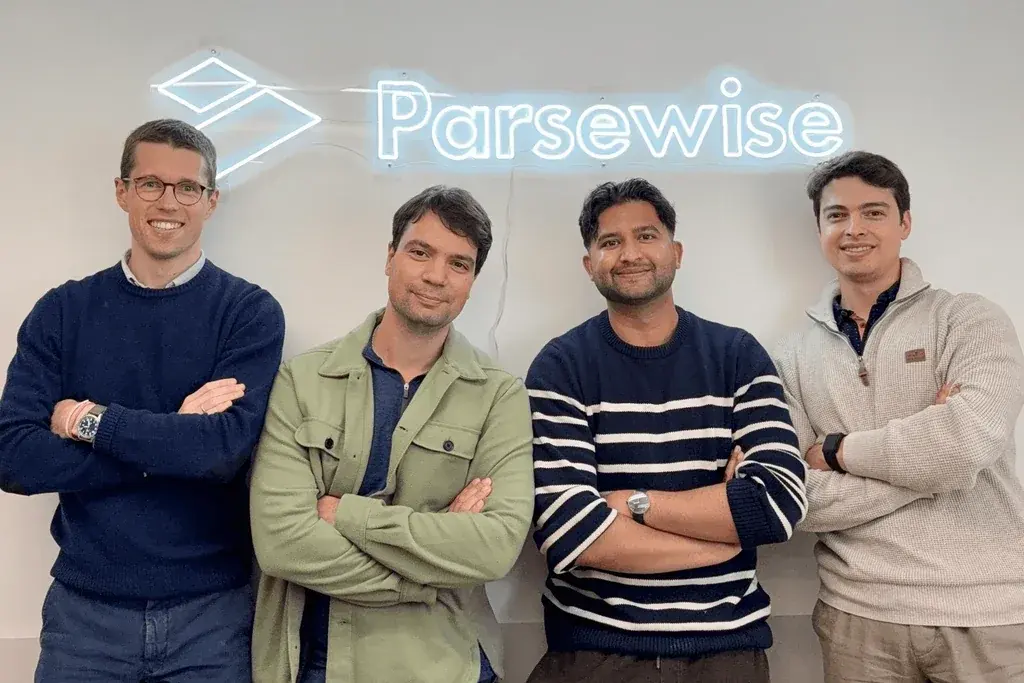
Max Hofer and Greg Csegzi met studying computer science at Oxford in 2017. [7]
At Palantir, Csegzi built some of the first production AI use cases, in life sciences and insurance. Working on Japanese insurance documents there, Csegzi found that every pipeline built around them was custom, slow and brittle. [7][8]
Hofer ran a first business at 12 and later did more than 20 private equity due diligence projects at Bain. There, Hofer saw the technology being held back by a trust problem. [7][8]
They founded Parsewise in London in 2024 and joined Y Combinator’s Spring 2025 batch. The goal is to end what Hofer calls data monkey work: experts copying figures out of documents instead of judging the risk. [4][9]
Today insurers, reinsurers, banks and investment managers use Parsewise, including UBS, Compre, Thinksurance, Pathfinder Insurance, OneIM and HypoHaus. [2][8]
What this looks like in practice
Compre: making inherited portfolios comparable
Compre takes on legacy insurance and reinsurance portfolios. Each one arrives as a package of loss runs, bordereaux, actuarial reports and policy documents, in different formats from different cedants and administrators. [2]
Parsewise standardises the loss runs and reserve triangles, then reconciles paid, incurred and reserve movements across the records. Anomalies, reserve shifts and data gaps are flagged for review. [2]
Compre’s team uses the results for portfolio pricing, reserve adequacy assessments and regulatory reporting. [2]
HypoHaus: every mortgage application in one format
A mortgage application brings tax returns, income statements, bank statements, asset declarations and property valuations, in different formats and languages. [2]
HypoHaus, a mortgage broker, uses Parsewise to pull out the financial data and map it into its underwriting templates. Parsewise flags missing documents and income figures that don’t match. Each income declaration links to the tax documents and bank statements behind it. [2]
In mortgage lending, review time per application fell from up to two hours to about 15 minutes, according to Google Cloud. [4]
Underwriting: the submission is ready before the underwriter opens it
Here’s how an underwriting team would use it.
A broker emails a submission with six attachments. Navi reads all of them and fills in the submission. It checks the risk against the team’s appetite and authority, and refers anything outside it to an underwriter. [1]
When the policy is issued, Navi compares it with the quote and last year’s wording, clause by clause. A flood limit issued at £1 million instead of the agreed £2 million gets caught before the client has a loss. [1]
Tested on 90 years of Treasury Bulletins
Parsewise put its engine through OfficeQA PRO, a Databricks benchmark of 133 hard questions across almost 89,000 pages of US Treasury Bulletins. The system has to find the right pages on its own. [5]
Against the official answers, Parsewise scored 58.65%, ahead of Fable 5 (57.90%) and GPT-5.5 (52.63%) in its published results. [5]
It also found 15 questions where later bulletins had revised the figures. Counting those, the score is 69.92%, and Databricks has since accepted several of the corrections, according to Google Cloud. [4][5]
From reading the file to finishing the work
Navi already writes its results into a customer’s own templates, and a browser extension helps fill in forms. [1]
Next, Parsewise plans to take on the rest of the integration: filling forms deterministically and mapping results into third-party APIs and web portals. [8]
Developers can already build on the engine through its API, starting with free credits. Through its MCP server, Claude can work on large document sets with the same traceability. [8][9]
Where Parsewise ranks
- #1 in Verify claimsFinancial services and insurance · 7 products reviewed
- #2 in Compare documentsFinancial services and insurance · 43 products reviewed
- #2 in Reconcile transactionsFinancial services and insurance · 30 products reviewed
- #2 in Mortgage loan file reviewFinancial services and insurance · 15 products reviewed
- #2 in Draft emailsFinancial services and insurance · 11 products reviewed
- and 1 more
Most document tools pull fields out of one document at a time and leave you to piece the results together. Parsewise reads the whole set and shows the page behind every answer. [8]
The bigger picture
Insurers, reinsurers and lenders rarely lack information. They lack the time to read it.
The structured data fits in a spreadsheet. The rest sits in notes, letters and reports that specialists can only sample before the deadline.
So they read the biggest files and price in a margin for what they didn’t read. [3]
Parsewise is betting that AI can now read every page, with a source for every answer, so the expert decides on the whole picture.
The claims that will cost the most often show it in the notes first. [3]
Now every note gets read.
Written by SOTA2 from Parsewise’s public materials. Customer experiences and product plans are reported by Parsewise. Ranking analysis and comparison data are from SOTA2.
Sources
- Parsewise — Navi, workflows, platform and security
- Parsewise — customer stories: Compre, HypoHaus and customer list
- Maximilian Hofer — The Risk of Sampling
- Google Cloud — Parsewise customer story
- Parsewise — SOTA results on Databricks OfficeQA
- Parsewise — plans and onboarding
- Launch YC — Parsewise: extract validated data from complex documents (May 2025)
- Launch YC — Parsewise API for agentic multi-document processing (May 2026)
- Y Combinator — Parsewise company and founders