
A purchase order is not the end of the job
A supplier changes a delivery date in an email. Another sends a quote as an attachment. Someone has to read both, update the ERP and decide whether a production plan is at risk.
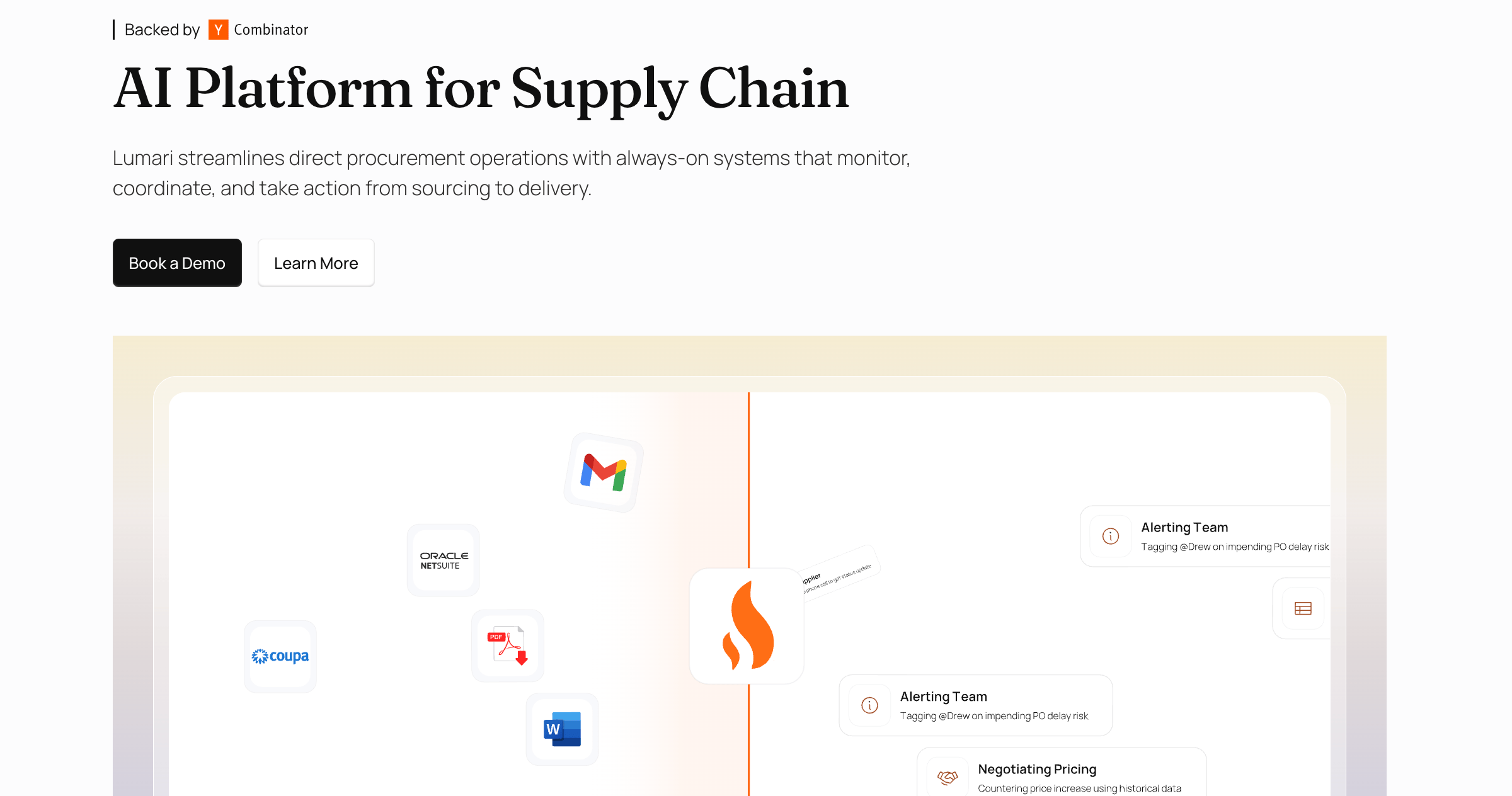
Lumari handles that operational work for direct procurement teams. Its AI agents run sourcing workflows, manage requests for quotations, monitor open orders and follow up with suppliers from sourcing through delivery. [1][2]
Suppliers keep using email. Lumari works over the company’s existing systems, so procurement teams can automate the chase without asking every vendor to join a portal. [1][2]
Turning a supplier reply into the next action
Lumari reads supplier messages and attachments, structures quote details and tracks order changes. The agents can write updated dates, shipment information and other purchasing data back to the ERP. [1]
For a sourcing event, the team can compare supplier quotes side by side. After an order is issued, Lumari follows up for confirmation and monitors the outstanding items for delays or pricing issues. [1][3]
Approvals follow the team’s rules. Procurement can require sign-off before an agent sends an email or updates the ERP, with actions logged for review. The company configures operating procedures and decides which steps can run automatically. [1][2]
Ultima Genomics moves from transactions to exceptions
Ultima Genomics builds sequencing systems with complex hardware and a product bill of materials spanning more than 3,000 parts. Its procurement team had to coordinate NetSuite, Arena, supplier email and internal conversations. [3]
Lumari helps turn that demand into RFQs, gathers engineering context from Arena and structures supplier responses for an award decision. The awarded items then flow into NetSuite purchase orders and the company’s approval process. [3]
Once the orders go out, Lumari tracks confirmations, delivery changes, split shipments and tracking numbers. Ultima’s team can focus on exceptions requiring judgment instead of entering every routine update. [3]
Lumari reports that Ultima achieved more than 20 times faster RFQ-to-PO processing. The team manages purchasing issues that need attention while routine work continues. [3]
Catching an order problem while there is time to act
Carbon Robotics uses Lumari to monitor open purchase orders and surface supplier delays earlier. Updated delivery commitments flow back into NetSuite, while approvals and alerts reach buyers in Slack. [4]
A changed promise date becomes a purchasing issue the team can act on. Buyers can assess the effect on a build, escalate the delay or explore another supplier before it becomes urgent. [4]
For manufacturing teams, that keeps supplier communication closer to production planning. The ERP holds a more current view of what is expected to arrive. [1][4]
Engineers taking on the manual chase
Eshani Mehta and Sam Lamba founded Lumari. Eshani previously worked at Stripe; Sam’s background includes Google, Amazon and Tesla. The company was founded in 2025 and backed by Y Combinator. [2][5]
Lumari builds around the systems and procedures a customer already uses. Its direction is an execution layer that carries procurement work across those tools, from the first sourcing request to the delivered part. [1][2]
Where Lumari ranks
The bigger picture
Supply chain teams need supplier information to become action: a quote compared, a delivery date corrected or a risk brought to the right person. [1][4]
Lumari puts agents into that daily work, giving buyers more time for the exceptions and decisions that need their experience. [2][3]
Written by SOTA2 from Lumari’s public materials. Customer experiences and product plans are reported by Lumari.